
4 Signs Your Website is a Dead End
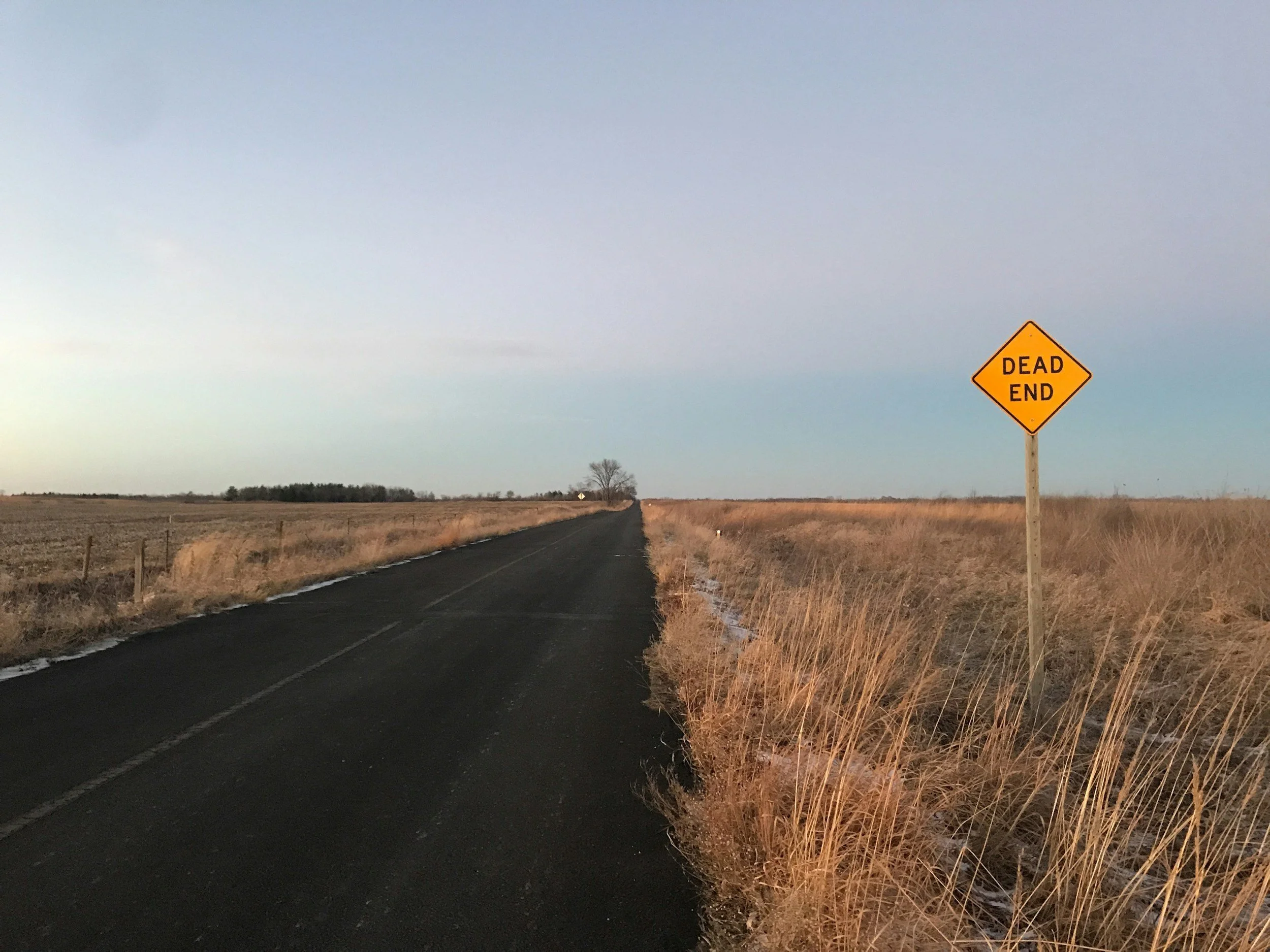
Imagine you’ve given someone a perfect set of directions to a destination. They know exactly where they’re going and why they want to get there. But when they arrive, the front door is locked, the windows are hooded, and there’s a small note on the door that says: "Please go back to the start and call me to find out how to get in."
Most small business owners treat their website like a digital business card—a pretty place to land that eventually tells people to "Email us for more info." But when your website is a dead-end, you are forced to personally guide every lead through the front door.
You’ve built a digital presence that generates more work for you, rather than a system that runs without you.

Sign 1: Your Website Needs A Tour Guide
There is a fundamental difference between a website that provides information **and a website that provides a sales experience.
A brochure is passive. It sits there, looks professional, and hopes someone takes action. But when a website is passive, the owner must be active.
You see this in the "Contact us for a quote" buttons or the vague intake forms that lead to a generic inbox. Every time a prospect hits one of those dead-ends, their momentum stops. To start it again, you have to step in. You become the manual tour guide, walking every prospect through the same hallway, answering the same five questions, and opening the same doors.
Sign 2: Your Contact Form is a "Work Generator”
If you hired a receptionist who told every person who walked in, "I’m not sure, you’ll have to wait for the boss to explain how this works," you’d realize the system was broken immediately.
Yet, we let our websites get away with it every day.
Business websites need a layout designed to handle objections, qualify budgets, and set appointments. If you’re still manually explaining your "how it works" process to every person who finds you online, your infrastructure is missing a gear.

Sign 3: You’re Still Finding the Right Colors
One of the biggest time-wasters for a growing business is the "Weekly Tweak"—the urge to spend Sunday nights changing button colors or adding new pages because of a fleeting idea. This is the opposite of leverage.
When your website is built as infrastructure, it’s a "Set Once" system. It stays relevant because it’s built on a stable process that doesn't require you to be in the backend every week babysitting or changing it.
If your website layout remains a dead-end, your growth will not be capped by the right shade of your brand’s blue but by how many people it converts to sales.
Sign 4: Your Menu is a Maze not a Map
When a lead lands on your site, do they know exactly where to go, or do they have to go hunting?
If your "Book Now" or "Get Started" button is buried under three layers of "Our Story" and "Browse Our Portfolio," you haven’t built a doorway—you’ve built a maze. In a world of infinite distractions, a confused lead doesn't stick around to solve the puzzle. They either leave, or they send you an email to ask, "How do I actually work with you?"
We aren't looking for "traffic." We are looking for flow. When your website is designed to move a lead from "Stranger" to "Qualified Prospect" without your intervention, you’ve stopped being the tour guide. You’ve become the architect of a machine that works so you don't have to.
At the end of the day, your website should be the most reliable employee on your payroll. It doesn’t get tired, it doesn’t forget the script, and it doesn't need you to hold its hand.